Patreon alternative and Patreon fees for creators who earn from recommendations
Most pages ranking for Patreon alternatives are lists written by a rival membership site and stop at a headline percentage. We read Patreon's own pricing page and its processing fee article, then worked the fees through a $1,000 month so the real cost per patron is visible. The deciding question is not which site charges less. It is whether your patrons pay you directly or whether companies pay you when your audience buys something you recommended. A membership page fits the first. It does nothing for the second.
The short answer
Patreon takes 10% of the income you earn on the platform, and payment processing, currency conversion and payout fees come on top. On US dollar payouts the help article lists processing at 2.9% plus $0.30 per payment. The closest alternatives are Ko-fi and Buy Me a Coffee for tips, and Stan Store for courses and downloads. A creator paid mostly in affiliate commission on gear, software and AI tools should look at Favly, because a membership page never sees that income.
Patreon fees read on its own pricing page and processing fee help article (archived copies, November 2026), shown there in US dollars. Rival prices come from each vendor's own pricing page, with the date we read it · No commission fee
Read your post as your collection. This is a preview of the cards Favly builds. Your own links go on in the studio.

Curated by · affiliate links clearly labeled
Estimated monthly
from monetized favorites
Estimated and illustrative, not a guarantee. Real earnings depend on your audience and what fans buy.
At a glance
Patreon fees and the main alternatives in one table.
Rows marked OFFICIAL quote a vendor's own page on the date shown. Rows marked STRUCTURAL are arithmetic or reasoning that follows from the official figures, with the working shown. Prices are in USD.
| What you want to know | The answer | Detail |
|---|---|---|
| Patreon platform fee | 10% of income earned | OFFICIAL, patreon.com/pricing, archived copy read November 2026. The page says Patreon is free to start and you pay when you earn, with payment processing, currency conversion, payout fees and taxes charged in addition. Creators who joined on older plans may pay a different percentage. |
| Payment processing, USD payout | 2.9% + $0.30 | OFFICIAL, Patreon help center article on fees, read November 2026. The article also lists different processing rates for non US dollar payout currencies. Check the table for your own currency. |
| Currency conversion | 2.5% when a patron pays in another currency | OFFICIAL, same article. Calculated on the full processed amount including tax. |
| Payout fee | Charged when you move money out | OFFICIAL. Patreon deducts a payout transaction fee when your balance is transferred. The amount depends on your payout method and country, so it is not included in the working below. |
| What $1,000 a month from 200 patrons at $5 leaves | About $811 before payout fees | STRUCTURAL. 10% platform fee is $100. Processing at 2.9% + $0.30 on each $5 pledge is $0.445, which is $89 across 200 patrons. $1,000 minus $100 minus $89 is $811. Smaller pledges lose a bigger share to the flat $0.30. |
| Patreon fee on affiliate commission | None | STRUCTURAL. Amazon Associates, Impact, Awin, PartnerStack and direct software programs pay you from their own systems. That money never reaches Patreon, so no fee applies to it. |
| Ko-fi | $0 with 5% fee, or $12 a month for Gold | OFFICIAL, ko-fi.com/pricing, archived copy dated 30 October 2026. 0% service fee on Gold. Processor charges come on top. Priced in full on our Ko-fi alternative page. |
| Stan Store | $300 or $948 a year | OFFICIAL, Stan owned pages, read 9 September 2026. Creator and Creator Pro on annual billing, 0% platform fee, no free plan, a 14 day trial. The closest swap for courses and downloads. |
| Favly Pro | $288 a year ($24 a month billed yearly) | OFFICIAL, favly.com/pricing. No fee on affiliate commission on any plan. Imports each program's commission report and matches it to the link that earned. No membership billing, tip jar or product checkout. |
what you are really paying for
Patreon is built for patrons who want to pay you. Check whether that is your income.
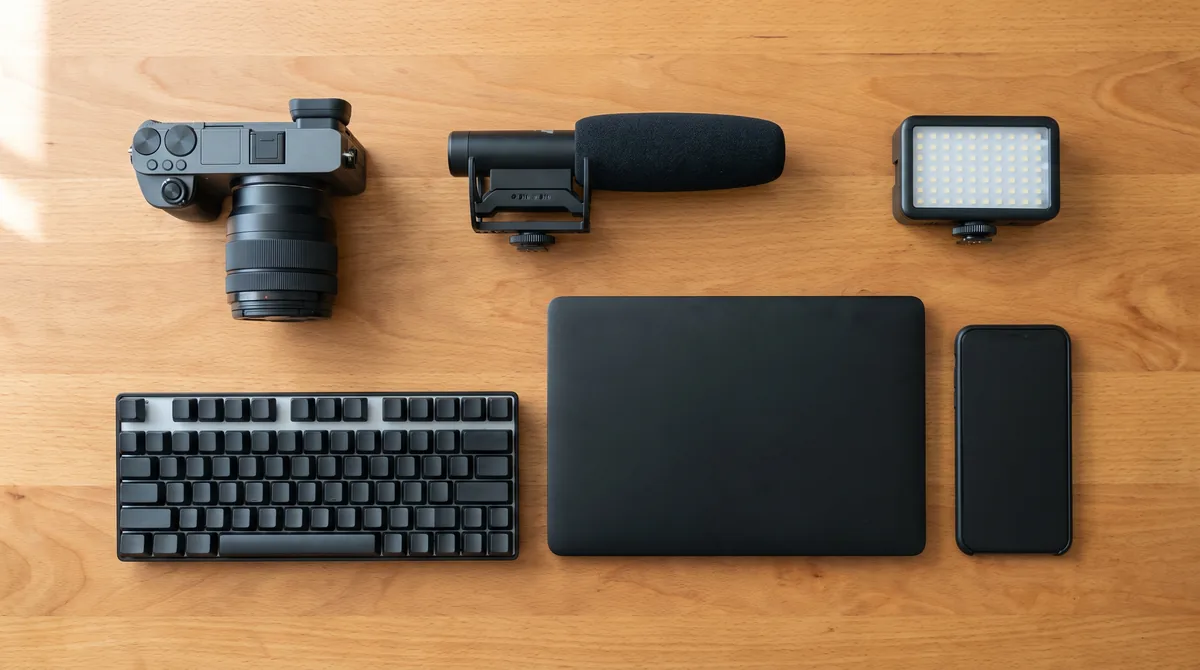
Patreon sells recurring memberships, one time payments and a home for exclusive posts. A creator who reviews cameras, AI apps or editing software usually earns most from commission paid by other companies, and none of that flows through a Patreon tier. The platform is strong at what it does. The question is whether it touches your main income at all.
What to check before you switch
What a Patreon alternative has to do better for a creator paid in commission.
Sort last year's income by source
Open your Patreon payouts and every affiliate dashboard you use and put the totals side by side. If most of the money came from patrons, you are pricing a membership business and the fair comparison is Ko-fi, Buy Me a Coffee and Stan Store. If most came from commission on gear, software and AI tools, you are pricing something else.
Work out the cost per patron, not the headline percentage
The flat $0.30 per payment matters more than it looks. On a $3 pledge, processing alone takes about $0.39 on top of the 10% platform fee. Run your own average pledge through the sum before you compare Patreon with a flat fee plan.
Know which link earned, not which link was tapped
A membership page cannot see what happens on a merchant's site. An affiliate sale is recorded in the merchant's system, often days later. No page can show which recommendation paid unless it imports the program's report. That import is what lets you move earners to the top and cut links that get tapped and never pay.
Treat software and AI tools as a separate shelf
A tripod pays once and usually at a low single digit rate. Many software and AI partner programs pay a share of the subscription for every month the customer stays. At a 20% to 30% recurring rate on a $30 a month plan, one referral who stays a year pays $72 to $108. A page that cannot tell those links apart from the tripod hides your best earners.
Keep your links working through the move
Update your Instagram, TikTok and YouTube bios first, then the descriptions on your most watched videos. Keep the Patreon page live while patrons still use it, and link to it from the new page.
Switch without losing taps
How to add an affiliate storefront next to Patreon in four steps.
Export what earned in the last 12 months
Pull the products and plans that paid commission from Amazon Associates, your software partner programs and any brand programs. Add the things you recommend that you have never been paid for, because those are the links to fix first.
Keep Patreon for what patrons pay you directly
Tiers, exclusive posts and one time payments work well there. Leave them in place and link to them from the new page rather than moving patrons around.
Build collections and tag every link
Create your storefront at favly.com/@you and group recommendations into collections such as camera, desk, editing and AI tools. Put the Favly tag in each program's sub ID or tracking field, so each commission row can be matched to the link that sent the buyer.
Move the bio link, then read the first report
Swap the link in your bios, then wait for the first full payout cycle. The report shows which collection and which link earned, which is information a membership page cannot give you about outside programs.
If it is not a fit
If your patrons pay you directly, stay on Patreon.
This page is not going to talk you out of a tool that fits. If your income is memberships, exclusive posts and one time payments from people who already follow you, Patreon does that job with a large existing audience of paying supporters. Favly does none of that. It is for creators who recommend other companies' products and want every link, collection and commission report in one storefront. Many creators run both, with Patreon for patrons and Favly for what they recommend.
What Favly does differently
- ✓ No follower gate and no application queue. Claim favly.com/@you and start today.
- ✓ Built for the AI tools, SaaS and tech gear you already recommend.
- ✓ Recurring commissions: subscription tools can pay every month a fan stays subscribed.
- ✓ Affiliate income and brand deals in one storefront, with #ad disclosure by default.
Side by side
Patreon and Favly Pro side by side, including where Patreon wins.
This table sets Patreon against Favly Pro, because those are what a creator who has patrons and also earns commission is actually choosing between. Patreon figures come from its pricing page and fee help article, archived in November 2026. Check the live pages before you commit, since fees change.
| Capability | Favly | Patreon | Notes |
|---|---|---|---|
| Price | $288 a year (Pro) | $0 to start, 10% of income | OFFICIAL. Processing, conversion and payout fees on top |
| Free to start | × | OFFICIAL. A genuine Patreon strength | |
| Recurring memberships and tiers | × | Its core purpose | |
| Fee on affiliate commission | None | None | STRUCTURAL. The merchant pays you directly, never through the page |
| Commission reports matched to each link | × | Not part of Patreon | |
| Priority recurring SaaS and AI programs | × | Patreon is built around patron payments | |
| Collections of recommended products | × | Posts and tiers, not product shelves |
FAQ
Questions creators ask about Patreon and what to use instead.
What is the best alternative to Patreon?
It depends on where your money comes from. For fan support, Ko-fi and Buy Me a Coffee are the closest swaps and both charge less at low volume. For courses and downloads, Stan Store. For creators paid mostly in affiliate commission, Favly, because a membership page does not touch that income.
How much does Patreon take?
Patreon takes 10% of the income you earn on the platform for creators on its current plan. Payment processing, currency conversion and payout fees come on top. On US dollar payouts the processing rate listed in its help article is 2.9% plus $0.30 per payment.
Is Patreon free?
Yes to start. Creating a page costs nothing and Patreon charges only when you earn, taking its platform fee out of that income. Processing, currency conversion and payout fees are charged in addition, so the real cost is higher than the headline percentage.
Are there sites like Patreon with lower fees?
Yes. Ko-fi charges 0% on tips and 5% on memberships on its free plan, or $12 a month for Gold with a 0% service fee. Buy Me a Coffee charges 5%. Both pass card processing on. Lower percentages mean less when your audience is small, so run your own pledge sizes.
Does Patreon take a percentage of affiliate commission?
No. Affiliate commission is paid to you by the merchant or network, not through a Patreon payment, so its fees do not apply. The commission you earn on gear, software and AI tools stays whole.
Is Patreon good for affiliate marketing?
Only as a place to put a link. It is built for patron payments, so it has no commission import or per link earnings. A creator paid mostly in affiliate commission gets more from a page that matches each payout to the link that earned.
What are websites like Patreon?
Websites like Patreon fall into three groups. Fan support tools, such as Ko-fi and Buy Me a Coffee. Creator shops with checkout, such as Stan Store, Beacons and Fourthwall. And affiliate storefronts, such as Favly, ShopMy and LTK, built around earning commission on products other companies sell.
Go deeper
Patreon publishes its plans on its own pricing page and explains processing in its fee help article, and both are worth reading before you compare. If you want the two big tip jars priced the same way, our Ko-fi alternative page works out when Gold pays for itself and our Buy Me a Coffee alternative page shows what a $5 tip leaves you.
If you also sell a product, Stan Store alternatives prices each creator shop from its own page and Fourthwall alternatives works out when its Pro plan pays for itself.
If your income is commission, an affiliate link in bio shows how a commission first page differs from a list of buttons, and SaaS affiliate programs and recurring affiliate programs cover the programs worth putting on it. Best creator commerce platforms explains why membership pages, shops and recommendation storefronts are different businesses.
Every storefront, link page and program, and who each one is built for
No application. No follower gate.
Claim your favly.com/@you storefront and turn the AI tools, software and gear you already recommend into affiliate commissions and brand deals.